Rodent & Pest Droppings Remediation: Safety
Hazard-assessment articles for rodent & pest droppings remediation, including when bloodborne, chemical, respiratory, sharps, structural, or waste controls may apply. PPE and containment must follow the actual exposure—not a universal checklist.
Safety posts focus on protecting you, your household, and any workers from the dust and debris rodents leave behind. They explain why a broom, a shop vacuum, or a leaf blower can turn a small problem into an exposure. They cover what kind of breathing protection fits attic work. They show how to air out a closed shed or cabin before anyone goes in. You will also find posts that compare doing it yourself with hiring a pro. These weigh attic heat and tight crawlspaces, and plan safety gear around what was actually found. Several articles cover rat poison already placed in the attic. They explain why it changes how you manage pets and children.
Get an email reply about rodent & pest droppings remediation
Send a short message to the follow-up inbox. A coordinator can reply by email. This form does not send emergency help; call 911 first if anyone is in danger.
This category matters because rodent droppings rarely seem alarming. They look like dirt, and cleaning them feels like a normal chore. The real dangers are easy to miss. There are fine particles in the air and soiled insulation spread across a floor. There may be rat poison left where pets can reach it. And there are hot, cramped spaces where a mask gets hard to wear. Knowing those risks helps you decide what to tackle yourself and when to leave it to a trained crew. The posts also cover how to keep a home running while an attic is sealed off. That can mean moving laundry away from the hatch or closing vents in rooms below the work area. Small steps like these protect people who never set foot in the attic.
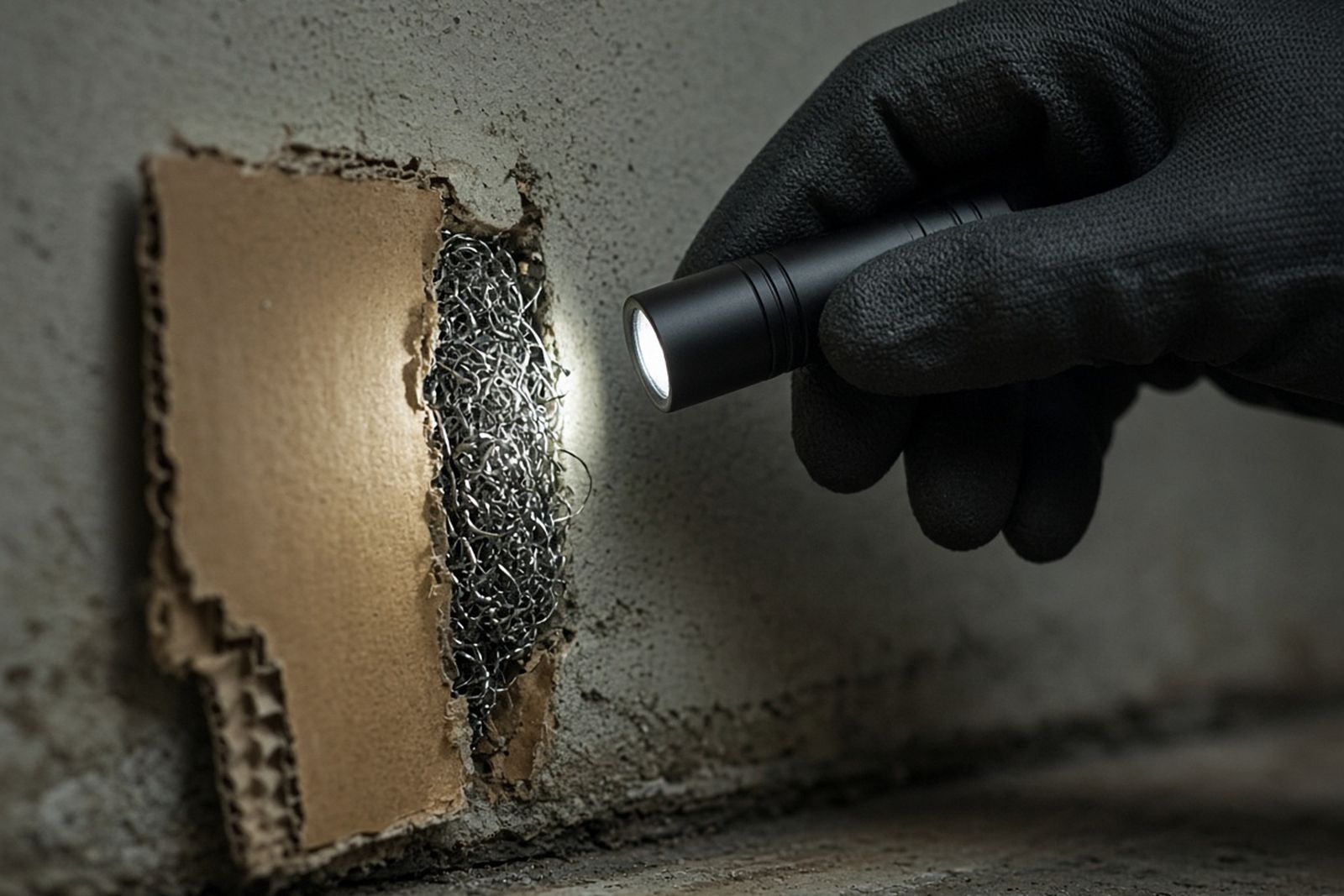
DIY vs Professional Rodent & Pest Droppings Remediation: The Critical Differences
A few mouse droppings under the sink versus a nest-filled attic: where careful DIY cleanup works, and where respirators, containment, and exclusion pros matter.
DIY rodent cleanup can be reasonable for a small number of droppings in an open, ventilated area, using gloves, a disinfectant soak, and paper towels, never a broom or vacuum. Call a professional for heavy infestations, nests, soiled insulation, attics, crawlspaces, closed buildings like cabins and sheds, or households with someone at higher health risk. Professionals also seal entry points so the problem stays solved.
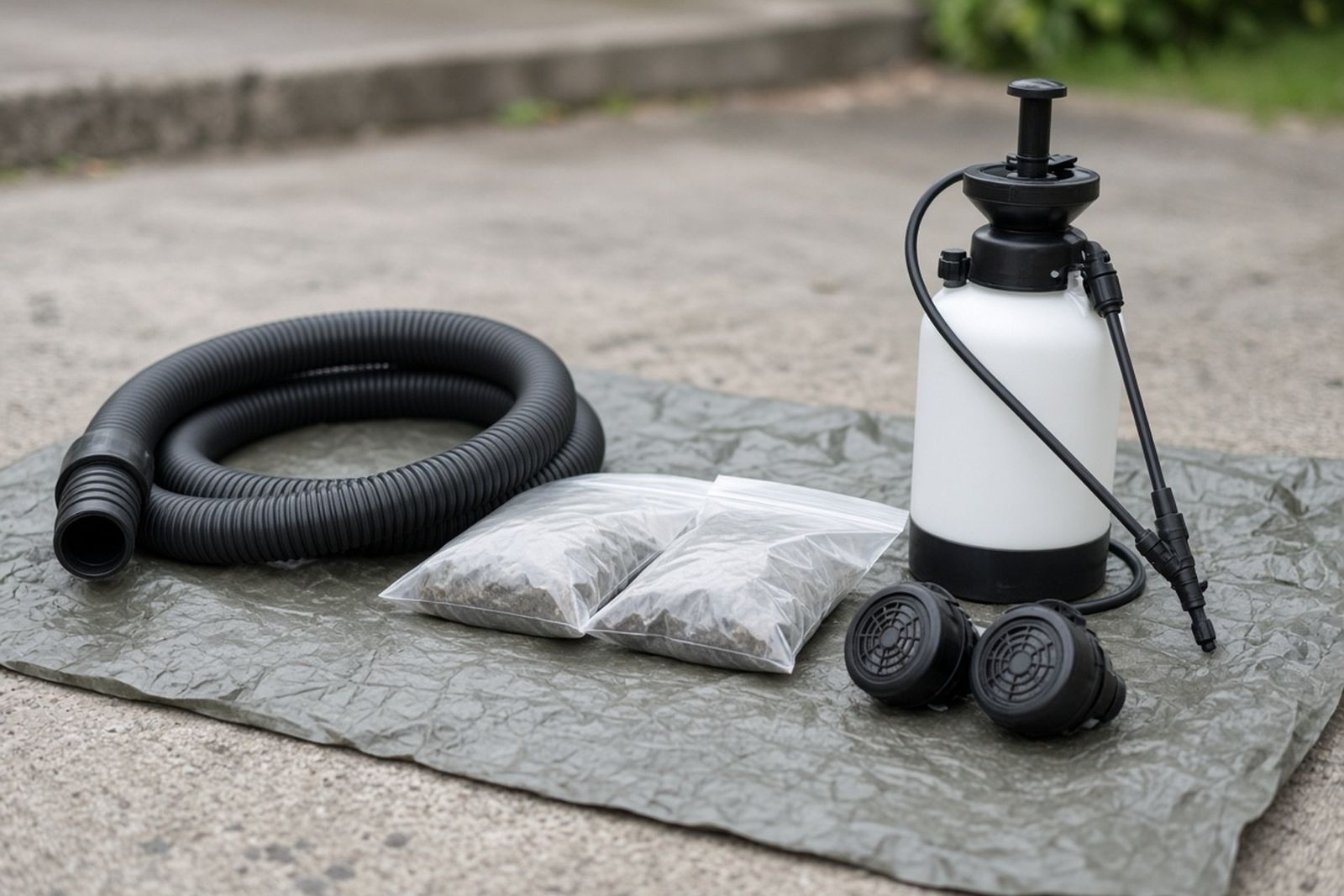
10 Rodent & Pest Droppings Remediation Safety Risks to Assess Before Work Begins
Airborne droppings, chewed wiring, hot attics, weak ceiling joists, and fleas: ten rodent droppings remediation risks to check before anyone starts cleaning.
Before rodent droppings remediation begins, assess ten risks: airborne particles from dried droppings, direct contact with urine, allergens, confined and overheated spaces, falls through ceilings or from ladders, chewed electrical wiring, disinfectant hazards, dead rodents and parasites, spread of contamination into living areas, and gaps that let rodents return. Each risk points to a specific precaution that keeps workers and occupants safe.
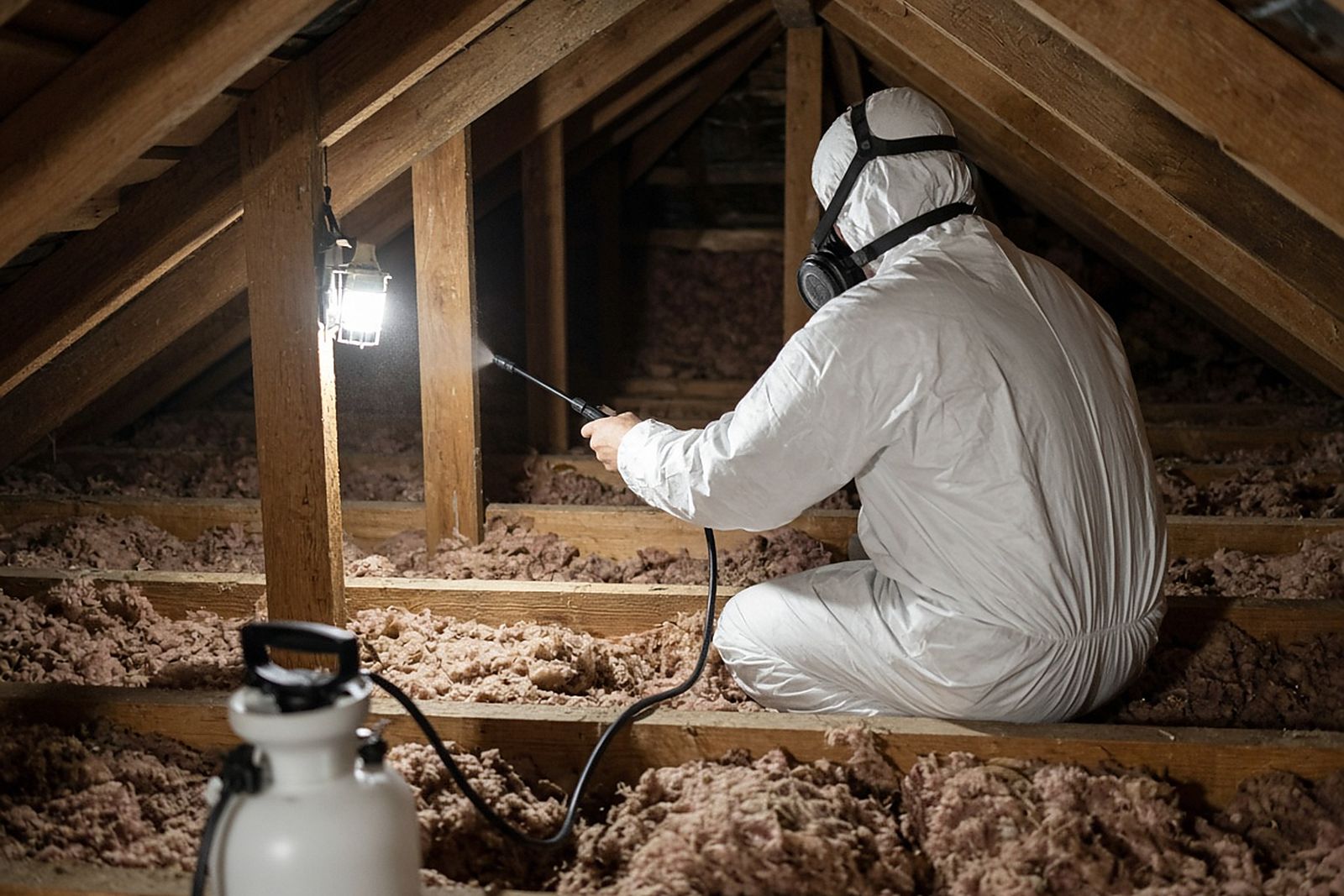
PPE Planning for Rodent & Pest Droppings Remediation: Start With the Hazard Assessment
A few droppings under a sink and a nest-filled attic need very different gear. See how rodent cleanup crews match gloves, respirators, and suits to the job.
PPE for rodent droppings remediation depends on how much contamination there is, how enclosed the space is, and whether material will be disturbed. Light spot cleanups usually need gloves and a wet-disinfect method. Heavy infestations in attics, crawlspaces, and sheds call for a fit-tested respirator with HEPA filters, goggles, coveralls, and boots, plus a careful removal routine so dust does not travel.
Sourced figures on safety
- 100-150 cases per year
Roughly 100 to 150 leptospirosis cases are reported in the United States each year, with Puerto Rico reporting the majority, per a CDC clinician fact sheet.
Read with care: Leptospirosis is spread by many animals, not only rodents, and is believed to be underreported.
Source: CDC (2018)United States including territories, annual reported cases
- 5%
CDC estimates about 5 percent of house mice across the United States carry lymphocytic choriomeningitis virus, and 2 to 5 percent of urban residents show evidence of past infection.
Read with care: Prevalence varies by location, and LCM is usually mild with mortality under 1 percent, though it is dangerous in pregnancy.
Source: CDC (2014)United States house mouse population and urban human seroprevalence, CDC estimates
- 82%
Mouse allergen was detectable in an estimated 82% of homes in this historical survey.
Read with care: Historical allergen detection; does not mean active mice in every positive home.
Source: Cohn et al. (2004)Representative sample of 831 US housing units in the first national housing-allergen survey.
These figures are public research and agency data, not this network's own job records. Keep each number with its population, year and limits; none of them predicts cost, timing or outcome at a specific property.
What research has found
Findings from published studies of people and properties in situations like this one. They describe what researchers observed in a specific group; they are not predictions for your case.
Outdoor pets or other animals were associated with higher rodent prevalence.
Reported rodent problems were associated with greater odds of elevated allergen levels.
Safety: common questions
Can I vacuum rodent droppings with my household vacuum?
Public health advice says no. A regular vacuum can blow fine particles from the droppings back into the room. It can also make the machine itself dirty. For small areas, the advice is to air out the space first. Then spray the droppings with a disinfectant or bleach mix and let it soak. Wear gloves and pick them up with paper towels.
Is a dust mask enough for cleaning a mouse-infested shed?
A loose paper dust mask gives little protection against the fine particles that matter here. For heavier messes or closed spaces, the usual advice is a well-fitted mask with the right filters. Fit matters as much as the filter. If you are not sure what to use, or the space is heavily soiled, that is a good sign to hire a pro.
What should I do if someone feels sick after cleaning up droppings?
Contact a doctor and describe the contact, including when it happened and what the space was like. Early signs of illness from rodents can look like the flu. So the cleanup history helps a doctor decide what to look for. If breathing becomes hard, get emergency care right away. Do not wait for an appointment.
Is it safe to let my dog into the garage where I found droppings?
Keep pets out until the droppings are cleaned with the wet method. Any traps or bait should be removed or secured first. Dogs may sniff, lick, or eat droppings or dead rodents. They can also track dirt into the house. Poison bait is a serious risk for pets. If your dog was already in the area and seems unwell, call your vet and mention the rodents.
Should I wear a respirator just to put out traps in the attic?
If the attic has droppings or nests you can see, a fitted mask with fine-particle filters is a sensible step. That holds even for a short task like setting traps. Moving through insulation can stir up dust. Wear gloves, move slowly, and try not to disturb more material than you must. If the mess looks heavy, think about letting a pro handle both the trapping and the cleanup.
What should I avoid mixing when disinfecting after rodents?
Never mix bleach with ammonia, vinegar, or other cleaners, because some mixes give off harmful fumes. Use one product at a time. Follow the label for how much to dilute it and how long it must stay wet. Rinse or let surfaces dry before you switch to another product. Work with good airflow and keep children and pets away. If you feel dizzy or irritated while cleaning, stop and get fresh air.
How can I protect myself when moving boxes that mice may have nested in?
Wear gloves and a fitted mask, and move slowly. If you see droppings, lightly mist the outside of the boxes with disinfectant before you lift them. Carry boxes outdoors and open them in fresh air, not inside the house. Throw out badly soiled cardboard and paper. Clean items worth saving with disinfectant. Store them in sealed plastic bins so mice cannot get into them again.
Related community polls
Every count is a real visitor vote; nothing is seeded or padded. One vote per poll per device, and you can change your answer.
If you found droppings across your attic insulation, what would you most likely do?
How well do you understand the hantavirus risk from rodent droppings?
More on rodent & pest droppings remediation
Rodent & Pest Droppings Remediation services
See how wet cleanup, attic and crawlspace work, bat droppings, sealing gaps, and insulation choices fit together after rodents move in.
Costs explained
What drives the price, published cost ranges, and how to read a written quote line by line.
Insurance and payment
Which policies may respond, how to document a claim, and what to do if coverage is denied.
Planning tools
Use the risk check, planner, cost estimator, vetting questions, claim organizer, and waste guide built for droppings in attics and crawlspaces.
Community polls
See how other homeowners and landlords handle attic droppings, new insulation, and the choice between cleaning up themselves or hiring help.
Knowledge quiz
Check whether you know why dry sweeping is dangerous, when insulation must go, and why sealing the gaps comes first.