Short answer
Rodent droppings remediation is shaped by several layers of rules. Federal law governs pesticide and disinfectant labels, OSHA protects workers, and states license pesticide applicators and set landlord habitability duties. Cities and counties add housing codes, health inspections, and waste rules for debris and dead animals. Identify who owns or rents the property and what work is planned, then check each layer locally.
No single law covers it
No single law addresses rodent droppings from start to finish. Instead, different rules attach to different parts of the job. Killing or trapping rodents, applying disinfectants, protecting workers, keeping a rental unit habitable, and throwing away contaminated insulation can each fall under a different agency.
That can feel confusing, but it also makes the research manageable. Once you know which activities your situation involves, you can look up the relevant rule for each one rather than hunting for a law that does not exist.
Rules vary by state and county; verify with the local authority. The sections below walk through the layers most people encounter, from federal labels down to city housing codes.
What federal rules shape how droppings are cleaned?
Two federal frameworks matter most. The first is pesticide law. Both rodenticides and disinfectants are regulated as pesticides at the federal level, and each registered product carries a label that is legally binding. The label says where and how the product may be used, what dilution is allowed, how long a surface must stay wet, and what protective equipment the applicator needs.
The second is worker safety. OSHA does not have a rodent-specific standard, but its rules on personal protective equipment, respiratory protection, and chemical hazard communication apply to employers whose staff clean up droppings. Those rules protect the crew, not the homeowner.
Federal public health agencies do not regulate private cleanup, but their published guidance is widely used as the practical baseline, and many state and local agencies point residents straight to it.
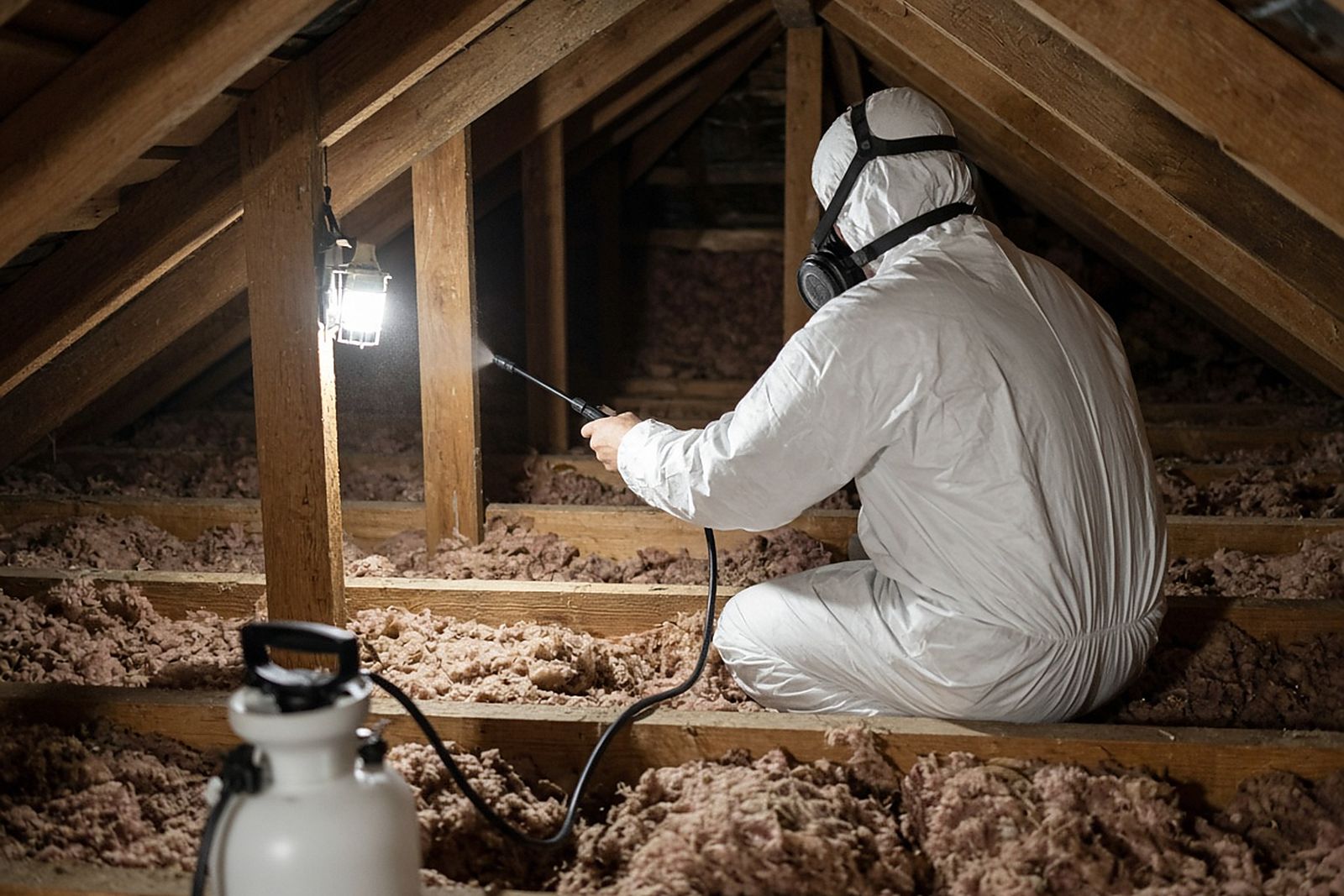
Label rules have practical consequences during a cleanup. A disinfectant approved for hard, nonporous surfaces may not be approved for wood framing or insulation, and a product labeled for wiping may not be labeled for misting. When a crew proposes a method, it is fair to ask whether the label on that product allows it.
- Pesticide labels: legally binding directions for rodenticides and disinfectants.
- OSHA: PPE, respiratory protection, and hazard communication for workers.
- Public health guidance: widely adopted cleanup steps, not a regulation for private homes.
Do states license the people who do this work?
Many states license commercial pesticide applicators, and rodent control usually falls within that system. A company that sets rodenticide bait stations or applies certain products for hire typically needs a licensed applicator and a business license from the state pesticide regulatory agency, often part of the agriculture department.
Whether pure cleanup and disinfection requires a license varies. In some states, applying a registered disinfectant for hire may fall under pesticide licensing in certain categories. In others, it does not. This is one of the questions most worth asking your state agency directly, or asking a provider to show you how it complies.
Contractor licensing can also come into play when a job includes removing and replacing insulation, drywall, or other building materials. Ask whether the company doing that part of the work holds the license your state requires for it.
Most states offer an online lookup for licensed applicators and pesticide businesses. Checking a company's status takes only a few minutes and can save you from hiring someone who is not authorized to perform the work they are offering.
Landlords and tenants
For rental housing, habitability law often matters more than any cleanup rule. Many states require landlords to keep units reasonably free of pests. California offers a clear example: California Civil Code 1941.1 requires landlords to keep rental premises free from accumulations of debris, filth, rubbish, garbage, rodents, and vermin as a condition of habitability, according to the state's official legislative site.
Other states have similar provisions in statute, in local housing codes, or through court decisions. The details vary, including who is responsible when a tenant's conditions contribute to the problem and how much notice a landlord must receive before acting.
If you are a tenant, put your report in writing and keep a copy. If you are a landlord, respond promptly, document inspections and treatments, and keep invoices. Both sides benefit from a clear record of what was found and what was done.
What do cities and counties add?
Local governments are often the most active players in rodent issues. City and county housing codes may set specific standards for pest control in rental buildings. Health departments may inspect restaurants, food businesses, and childcare centers for signs of rodents. Code enforcement offices may respond to neighborhood complaints about overgrown lots or garbage that attract rats.
Rodent problems are common enough that local programs exist in many areas. Some large cities run rat abatement programs, baiting public areas and educating residents.
Local waste rules can also affect cleanup. Some areas have specific instructions for bagging dead animals, and haulers may have preferences for how contaminated insulation is packaged. Check before a crew fills a dumpster.
Condominium and homeowners associations can add one more layer. Governing documents may assign responsibility for pest control in common areas, attics, or shared walls to the association rather than individual owners. If you live in a shared building, read those documents or ask the manager before hiring anyone for work that extends past your own unit.
Food businesses and workplaces
Food businesses and workplaces have their own rules, and they can be stricter than residential rules. Restaurants, grocery stores, warehouses that handle food, and food manufacturers are typically subject to food safety codes that treat rodent activity as a serious violation. Evidence such as droppings or gnaw marks can lead to corrective orders or temporary closure, depending on the jurisdiction.
In these settings, cleanup is only part of the response. Inspectors often expect documented pest control service, exclusion repairs, sanitation of affected food-contact surfaces, and disposal of contaminated products. Keeping a pest control log and cleanup records ready for inspection is a practical necessity.
Workplaces of any kind also bring in OSHA duties if employees are assigned to clean up rodent debris. That is often a reason businesses hire outside providers for heavier contamination.
Hantavirus reporting and public health
Hantavirus is a reportable disease in public health surveillance, which means clinicians and laboratories report confirmed cases to health authorities. That reporting is how agencies track where the virus occurs.
As a property owner, you generally do not have a duty to report finding droppings. If someone in your household is diagnosed with a rodent-borne illness, however, local public health staff may contact you to learn about the exposure and offer cleanup guidance. Their advice can be very useful in deciding whether to hire a professional.
If you live in an area where hantavirus is known to occur, your state or county health department may publish specific cleanup instructions. Follow those local instructions where they differ from general guidance.
Walking through a duplex infestation
To see how the layers stack up, walk through an illustrative duplex rather than a real case. A tenant in one half of a duplex emails the landlord that she has found mouse droppings in kitchen cabinets and behind the stove. The other tenant has noticed scratching in the shared attic. The landlord wants to respond correctly and quickly.
In this scenario, the landlord first checks the state's habitability rules and the city housing code, which both require pest-free rental units and set expectations for prompt response. He hires a licensed pest control company for trapping and exclusion, and a remediation provider to clean the cabinets and the attic.
He asks the remediation provider which disinfectant it will use and confirms the product label allows the planned application. He gives both tenants written notice before crews enter, keeps the invoices and photos, and follows up with each tenant a few weeks later to confirm the activity has stopped. If a tenant had reported illness, he would also have contacted the county health department for guidance.
How can you research the rules where you live?
A short, organized search usually answers most questions. Start with your state pesticide regulatory agency to learn about applicator licensing. Then look at your state's landlord-tenant resources if you rent or own rental property. Finally, check your city or county housing code and health department pages for local pest and sanitation rules.
When you call an agency, describe the situation specifically: the type of property, whether it is rented, where the droppings are, and what work is planned. Keep a note of who you spoke with and what they said. That record helps if questions come up later, and it makes the next conversation with a contractor much easier.
If your situation involves more than one layer, such as a rental unit with a sick tenant and a heavy attic infestation, it can help to ask a qualified provider to walk you through the local requirements. A company that works in your area regularly will usually know which offices to contact and what documentation they tend to expect.