Rodent & Pest Droppings Remediation: Education
Science and technology used in some rodent & pest droppings remediation scopes, with explicit limits for ATP, disinfectants, enzymes, fogging, air equipment, and moisture tools.
The education category explains what is really going on in a soiled attic or crawlspace. Articles cover how droppings, urine, and nests release tiny particles when stirred up. They explain why public health advice stresses wetting and airing out instead of sweeping. They also cover how hantavirus, leptospirosis, and salmonella relate to rodent contact. Other posts explain the difference between cleaning and disinfecting soiled wood. They cover what fine-particle air filters can and cannot do. They also cover a quick swab test that shows leftover organic residue, though it does not detect germs. Some posts explain when enzyme products help with urine smell after the source is gone. You will also find explainers on how to judge the equipment a company proposes, from air cleaners to insulation vacuums, and what each machine is for.
Get an email reply about rodent & pest droppings remediation
Send a short message to the follow-up inbox. A coordinator can reply by email. This form does not send emergency help; call 911 first if anyone is in danger.
This background matters because a droppings estimate often lumps pest control, cleanup, and insulation work into one number. Blown paper insulation holds urine differently from fiberglass. A musty smell can also linger after the droppings you can see are gone. Knowing why helps you judge whether a proposed plan fits your attic. It also helps you spot equipment claims that sound impressive but do not deal with the waste left behind. Learn to tell a nest from a bathroom spot and from a path along the top of a wall. Then talks with a technician get far more useful. You can ask better questions and see why one corner of the attic needs more work than another.
The Science Behind Rodent & Pest Droppings Remediation
Why rodent droppings are wetted, not swept, and why urine-soaked insulation often goes. The biology of hantavirus, allergens, and scent trails explained.
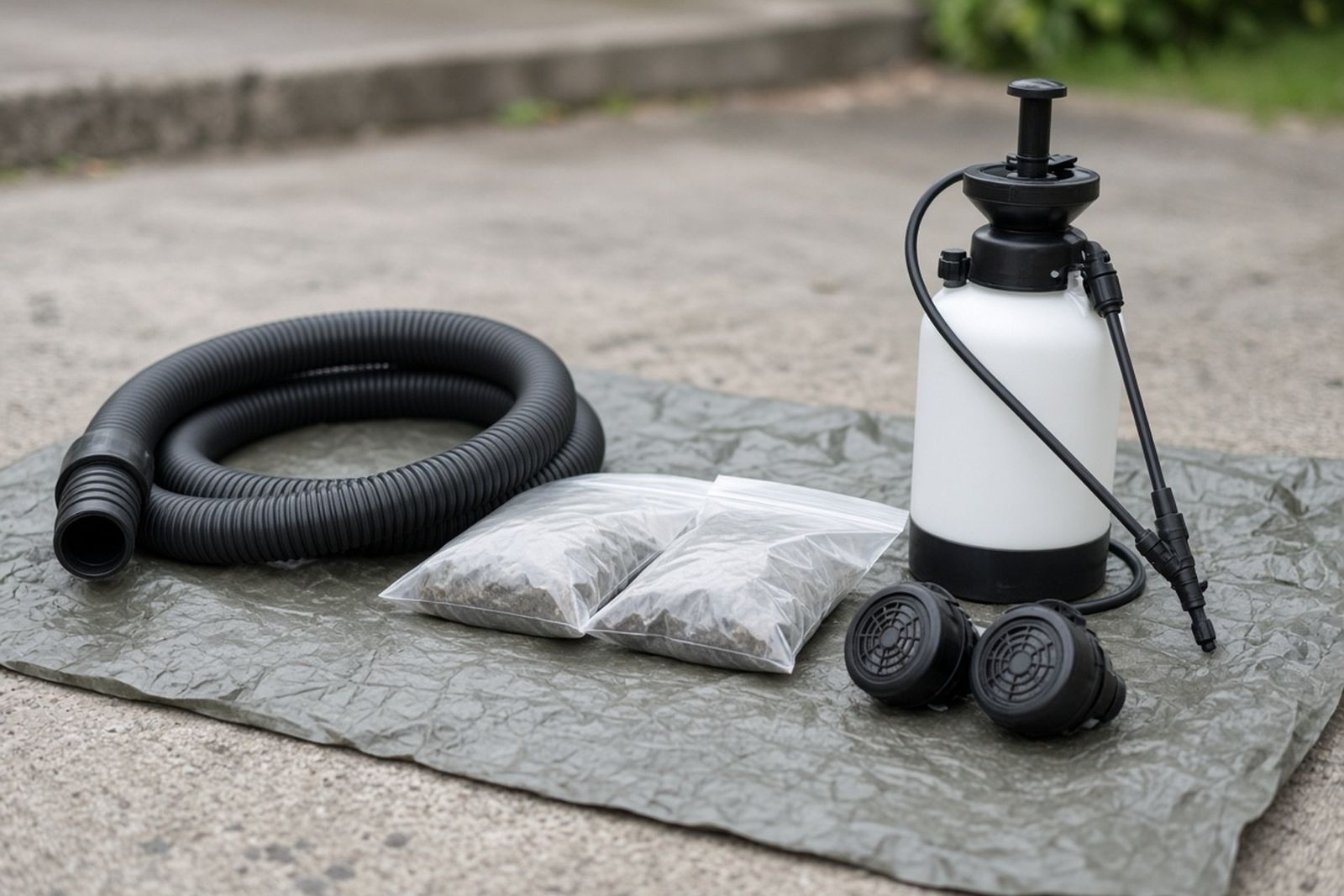
Rodent droppings remediation is shaped by how the hazards move. Viruses such as hantavirus spread mainly when dried urine, droppings, and nest material are disturbed into the air, so professionals soak before they touch anything. Allergens and scent markers soak into porous materials, which is why insulation and nesting areas are often removed. Sealing entry points keeps the cleanup from being undone.
How to Evaluate Equipment Proposed for Rodent & Pest Droppings Remediation
Respirators, low-pressure sprayers, insulation vacuums, UV lights, and chew-proof sealing materials: how to judge the gear in a rodent remediation proposal.
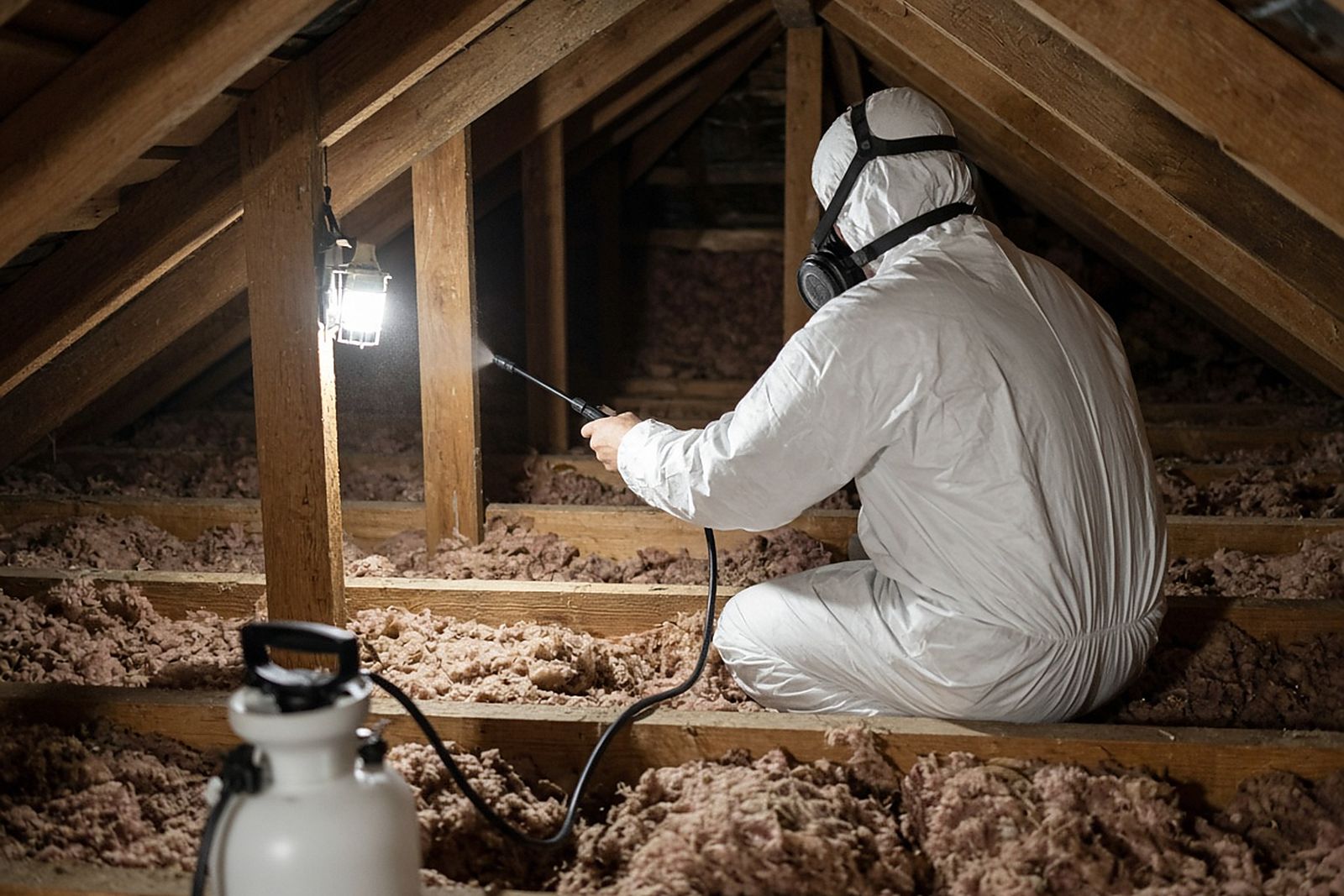
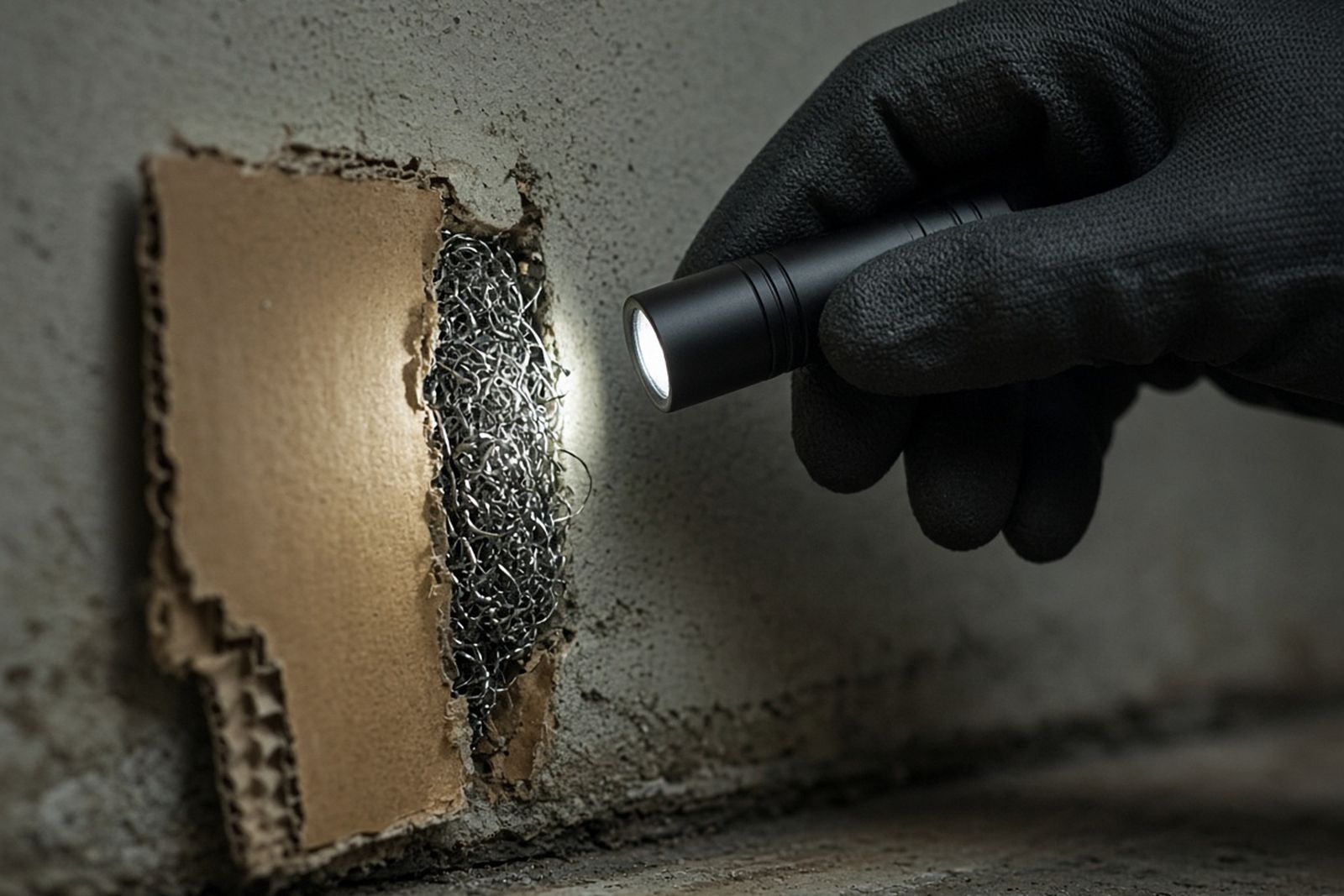
To evaluate equipment for rodent droppings remediation, check that the proposal keeps dried material wet and still, protects workers' lungs, removes soiled insulation without spreading it, and seals entry points with materials rodents cannot chew through. Look for respirators with HEPA filters for heavy jobs, low-pressure sprayers, sealed insulation removal systems, containment for living areas, and exclusion materials such as metal mesh and sheet metal.
The Difference Between Cleaning and Disinfection in Rodent & Pest Droppings Remediation
With mouse and rat droppings, disinfecting comes before and after cleaning. Why the order matters, how contact time works, and what each step accomplishes.
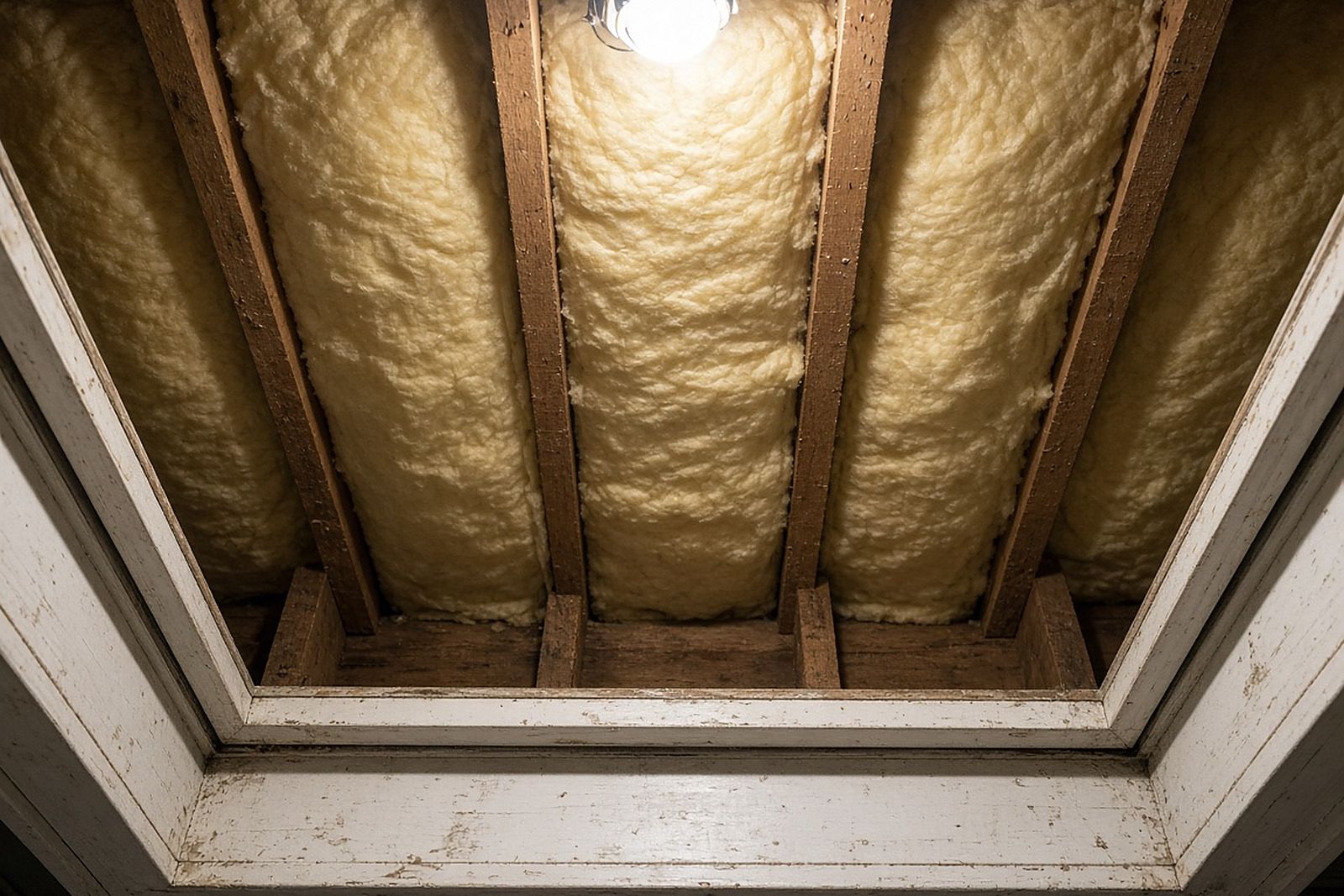
Cleaning removes droppings, urine stains, nests, and dust, while disinfection kills germs that remain. In rodent remediation the two steps are interwoven: droppings are soaked with disinfectant first so they do not become airborne, then removed, then surfaces are cleaned and disinfected again. Skipping the first soak, or wiping before the label contact time, leaves the job incomplete.
When ATP Testing Helps—and When It Does Not—in Rodent & Pest Droppings Remediation
ATP swabs can confirm a pantry shelf or countertop was cleaned after mouse droppings. They cannot detect hantavirus, allergens or nests hidden in insulation.
ATP testing can be a helpful quality check on hard, sealed surfaces such as kitchen counters, pantry shelving and stainless prep areas after rodent droppings are cleaned. It measures general organic residue, not hantavirus, bacteria or mouse allergen, and it gives meaningless readings on insulation, wood framing or soil. Visual inspection, removal of nests and soiled materials, and exclusion matter more.
How to Evaluate Technology Used in Rodent & Pest Droppings Remediation
UV lights, thermal cameras, smart traps, foggers and air scrubbers all appear in rodent cleanup quotes. Learn how to judge which tools earn their place.
To evaluate technology in rodent droppings remediation, ask which step it improves: finding activity, controlling rodents, removing contaminated material, disinfecting, or verifying results. Inspection cameras, UV lights, remote-monitoring traps, filtered insulation vacuums and air scrubbers can all help when used correctly. Foggers and ozone generators deserve more skepticism, and no device replaces wet cleaning and sealed entry points.
When Enzymes or Microbial Products Fit Rodent & Pest Droppings Remediation
Enzyme cleaners can tackle lingering rodent urine odor in subfloors and concrete, but they come after disinfection and never replace wet cleanup or removal.
Enzyme and microbial products fit rodent droppings remediation as a finishing step for lingering urine odor and organic staining on surfaces that stay in place, such as subfloors, concrete and framing. They are not disinfectants, so droppings and urine must first be soaked with bleach solution or a registered disinfectant and removed. Heavily soiled insulation and porous items usually still need removal.
Sourced figures on education
- 82%
Mouse allergen was detectable in an estimated 82% of homes in this historical survey.
Read with care: Historical allergen detection; does not mean active mice in every positive home.
Source: Cohn et al. (2004)Representative sample of 831 US housing units in the first national housing-allergen survey.
- 35%
35% continued using pesticides after the intervention.
Read with care: No universal product endorsement; long-term sustainability and cost-effectiveness unresolved.
Source: Roomaney et al. (2012)175 Cape Town household respondents followed six months after receiving two rat traps.
- 100-150 cases per year
Roughly 100 to 150 leptospirosis cases are reported in the United States each year, with Puerto Rico reporting the majority, per a CDC clinician fact sheet.
Read with care: Leptospirosis is spread by many animals, not only rodents, and is believed to be underreported.
Source: CDC (2018)United States including territories, annual reported cases
These figures are public research and agency data, not this network's own job records. Keep each number with its population, year and limits; none of them predicts cost, timing or outcome at a specific property.
What research has found
Findings from published studies of people and properties in situations like this one. They describe what researchers observed in a specific group; they are not predictions for your case.
Reported cockroach problems were also associated with elevated mouse-allergen levels.
Willingness to buy traps in an informal market was associated with acceptance.
Education: common questions
How does hantavirus spread from droppings to people?
The virus is mainly shed in the urine, droppings, and spit of certain wild rodents. People are usually exposed by breathing in tiny particles. Those particles get stirred up when the waste is swept, vacuumed, or disturbed in other ways. That is why health advice stresses airing out the space first. It also stresses wetting droppings before any removal, rather than cleaning them dry.
Why does urine odor sometimes remain after the droppings are removed?
Rodent urine soaks into insulation, wood beams, and the paper on drywall. Small amounts along rodent paths can go unnoticed. Once the droppings are gone, those soaked spots keep giving off odor. Removing soiled soft material and cleaning stained wood deals with the source. Enzyme treatments or sealing can help with any residue that stays in the wood.
Is fiberglass insulation easier to salvage than blown cellulose?
Neither is easy to save once droppings and urine have spread through it. Fiberglass rolls can sometimes be taken out in sections. That may limit how much has to be replaced. Loose paper insulation tends to mix droppings all the way through, and it soaks up urine easily. So heavily soiled areas are usually vacuumed out. The choice depends on how far the mess has spread.
What is the difference between mouse and rat droppings in terms of cleanup?
Rat droppings are usually bigger and may be found in fewer, heavier clumps. Mouse droppings are smaller and often scattered widely along their paths. The wet cleaning method is the same for both. The difference matters more for sealing gaps. Mice fit through smaller gaps, and rats can do more chewing damage. A company should figure out which animal it is before it plans how to seal your home.
Why do rodents like attics and crawlspaces so much?
These spaces offer warmth, shelter, and quiet, and people rarely go into them. Insulation makes soft nesting material. Gaps around vents, pipes, and rooflines give easy ways in. Attics and crawlspaces also connect to the spaces inside walls, so rodents can travel through a home unseen. That mix of comfort and easy access explains why so many rodent problems center in these areas.
Can droppings tell me how long rodents have been in my home?
They can give rough clues. Fresh droppings tend to be darker and softer. Older ones are dry, crumbly, and faded. Heavy piles, layers of nesting, and a strong smell suggest rodents have been there a long time. These signs are not exact. But a company can use them to judge whether rodents are still active. It can also judge how far the mess may have spread through insulation or stored items.
Where can I find reliable information about rodent-borne diseases?
Public health agencies at the national, state, and local levels publish advice on diseases spread by rodents and on safe cleanup. University extension programs also offer practical advice on rodent control and prevention. These sources are usually more reliable than product ads or social media. If you have a specific health worry after contact, your doctor is the best source for advice that fits your case.
Related community polls
Every count is a real visitor vote; nothing is seeded or padded. One vote per poll per device, and you can change your answer.
If you found droppings across your attic insulation, what would you most likely do?
How well do you understand the hantavirus risk from rodent droppings?
More on rodent & pest droppings remediation
Rodent & Pest Droppings Remediation services
See how wet cleanup, attic and crawlspace work, bat droppings, sealing gaps, and insulation choices fit together after rodents move in.
Costs explained
What drives the price, published cost ranges, and how to read a written quote line by line.
Insurance and payment
Which policies may respond, how to document a claim, and what to do if coverage is denied.
Planning tools
Use the risk check, planner, cost estimator, vetting questions, claim organizer, and waste guide built for droppings in attics and crawlspaces.
Community polls
See how other homeowners and landlords handle attic droppings, new insulation, and the choice between cleaning up themselves or hiring help.
Knowledge quiz
Check whether you know why dry sweeping is dangerous, when insulation must go, and why sealing the gaps comes first.